
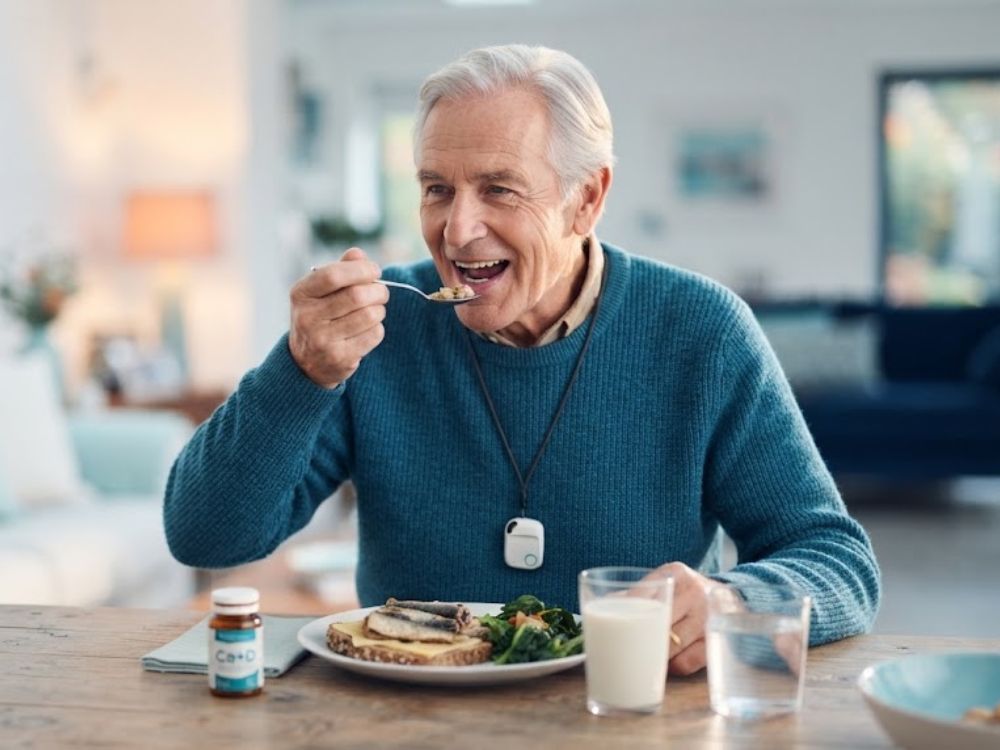
Calcium and Vitamin D: What Seniors Actually Need
At what age should we rethink our eating habits? My mother believed for a long time that a glass of milk at breakfast covered her needs, just as it had at forty. But the body changes, and the way it absorbs certain essential nutrients changes with it. Calcium and vitamin D, in particular, no longer play the same role after 65. Understanding that shift means being better equipped to support an aging parent, and sometimes, to anticipate the moments when a little extra help becomes reassuring.
Why does calcium absorption change with age?
Eleanor has planted her tomatoes in the same corner of the garden for twenty-two years. She swears it is the best spot, the one that gets sun from noon until four. Last summer, she also started sitting there on purpose, twenty minutes, tea in hand, with no other aim than to feel the warmth on her arms. A brand new habit for a woman who, for decades, always came in through the shade.
The sun remains one of the natural sources of vitamin D, and vitamin D helps the body absorb calcium more effectively. With age, though, the skin produces it less readily, even with the same amount of exposure as before. Still, this is not only a question of sunlight. The intestine itself absorbs calcium less efficiently over the years, which means the same serving of dairy no longer delivers to the body what it did at forty. Recommended intakes therefore go up with age, not because bones turn greedy on a whim, but because every stage of the process loses a little of its efficiency.
How can you recognize a fall risk linked to diet?
This year, Eleanor reorganized her pantry. The sardines, once pushed to the back, now sit at eye level, between the coffee and the plain biscuits. She calls it her new smart shelf.
Bones weakened by a prolonged shortfall in calcium and vitamin D become more fragile, which can worsen the consequences of a fall, an event already common among aging adults. Diet on its own, however, does not prevent everything. Dairy products, oily fish and certain eggs provide a solid base, but the body also needs a safety net for the unexpected, the kind no plate can prevent. That is where vigilance widens, from the kitchen to the rest of daily life, including the moments when no one is there to help.
A call for help device built around independence
Faced with a fall risk that exists no matter how good the diet, SmartSAFE offers discreet, reliable support for seniors who want to stay in their own homes with confidence. Whether as a pendant or a smartwatch, the built-in SOS button makes it quick to reach a loved one or an assistance centre available anywhere in Canada, with no complicated steps and no demanding technology. Automatic fall detection and GPS location add a layer of peace of mind for the family, without ever taking away the senior's control over their own life. A medical alert system that sets up simply, is worn every day, and stays invisible until the moment it truly counts.