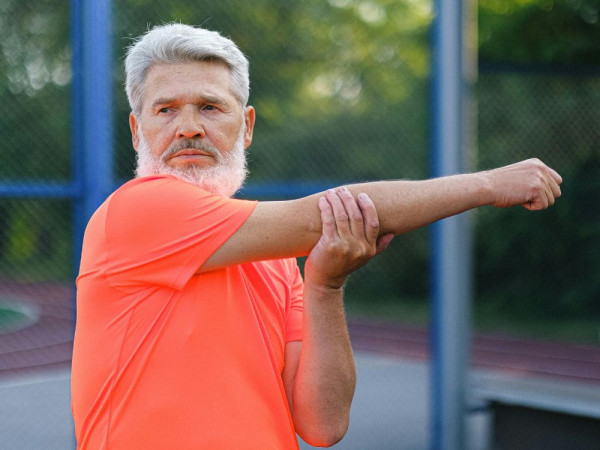
Osteoporosis exercises for seniors
Osteoporosis exercises for seniors slow bone loss and strengthen muscles, which can help prevent falls, according to Osteoporosis Canada. World Osteoporosis Day, October 20, is a good reminder to get started. Here is how to begin gently, with simple movements, a pace that suits you, and a few safety guidelines.
Weight-bearing exercises, explained
A weight-bearing exercise is a movement in which your bones and muscles support a load, either your own body weight or that of a small object. Osteoporosis Canada recommends starting with your body weight against gravity, then moving on to resistance bands or light weights once the movements feel easy. The effort should be real work, adapted to your abilities and health condition, and never forced. Start with ten minutes, then lengthen the session once the movements feel easy and you feel confident.
Osteoporosis Canada gives these examples of movements, to be adapted to your condition:
- The squat, or standing up from a chair and sitting back down.
- The lunge, a step forward while bending the knees.
- The bridge, lying on your back and gently lifting your hips.
Gentle strengthening, emergency button within reach
Bend from the hips and knees rather than the back, with slow, controlled movements, recommends Osteoporosis Canada. After a recent fracture or if your risk is high, avoid repeated bending and twisting. Ask your doctor or a physiotherapist for advice before you start, and keep your emergency button on you during sessions.
For frequency, Osteoporosis Canada suggests two or more times a week for each type of exercise, namely balance and muscle strengthening. Increase the difficulty over time, without rushing: gentle, regular strengthening is better than a session that is too hard and gets abandoned. Choose a time of day when you are well rested, and keep a sturdy chair or a counter nearby to lean on if needed.
Medical alert systems for seniors
SmartSAFE is our medical alert system, available as a pendant or a watch. Its SOS button connects to our response centres 24 hours a day, 7 days a week, and GPS location shows where you are, at home or in the park. It works anywhere in Canada with cellular coverage, with no long-term contract. These medical alert systems suit an older adult who exercises to stay active. Wear it from the warm-up, just as you would when leaving the house.
What if the fall detection goes off during an exercise? Automatic fall detection is a recent technology: false alerts can occur, and we cannot guarantee that every serious fall will be detected. To cancel a false alarm, briefly press the button within 10 seconds, at no charge.
To learn more, visit our page on mobile medical alert systems.