Aging in Place in Canada and the Adjustments It Takes
There is a question that occupational therapists hear often in their careers, phrased in different ways but always with the same core idea: can my mother still stay in her own home for a while longer? The answer, most of the time, is yes. Not because of a miracle, but because of a few concrete changes that building and rehabilitation professionals have been recommending for years. Aging in place is not a vague ideal. It is an organization. And for Canadian seniors who want to keep living life on their own terms, that organization starts well before any incident forces the decision.
Which home adjustments actually make a difference for independence?
Raymond had a habit. Every morning, he checked the clock on his nightstand to confirm it was not yet past 8am. Last winter, that same nightstand had quietly become the one spot he leaned on to get up after lying down. No incident. No fall. Just a silent adaptation, almost invisible, one he himself would have had trouble putting into words.
What Raymond was doing instinctively, architects and occupational therapists have long formalized. The concept is called universal design, meaning designing or adapting a space so it can be used effortlessly, regardless of age or physical condition. In practice, for elders living at home, the four areas that make the biggest difference are the bathroom, the entryway, the hallways, and the lighting. A properly secured grab bar in the shower considerably reduces the risk of slipping. A lowered door threshold removes a daily obstacle. Adequate lighting at night between the bedroom and the bathroom reduces movement in the dark. These adjustments cost little. Their impact, however, is well documented by rehabilitation professionals across the country.
Does an emergency button actually change anything about aging in place?
Raymond had turned down the subject three times before. This year, he was the one who brought it up first, on a Sunday, after reading about a friend of his who had waited several hours alone following a bad fall in his garage. He did not dramatize anything. He simply asked the question out loud, as if he were thinking about switching coffee brands.
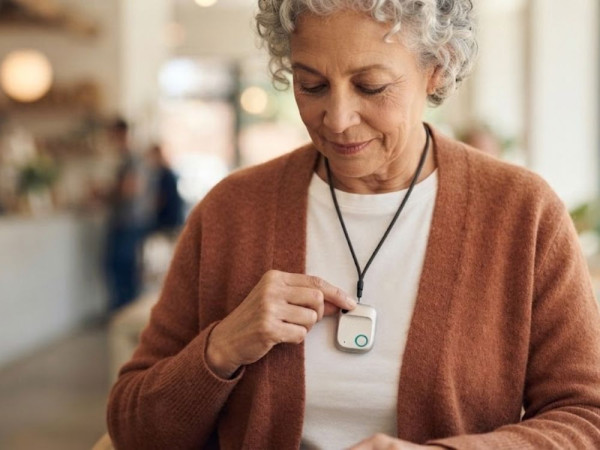
The question he was asking is one that many veterans of their own lives eventually ask themselves, often after an outside event acts as a mirror. A personal medical alert device, worn daily, does not replace the physical adjustments made to a home. It complements them. Architectural changes reduce the risks. Remote monitoring reduces the consequences if something happens anyway. That said, it is the combination of both that allows a loved one to stay home with a real margin of safety, without it feeling like surveillance. One acts on the environment, the other acts on response time. These are two different tools, for two different kinds of situations.
Medical alert systems for seniors that fit naturally into life at home
SecurMEDIC offers a range of devices across Canada designed for retirees who want to stay home without compromise. SmartSAFE is available as a pendant or a connected watch, depending on preference. It includes automatic fall detection, an SOS button, two way communication, and GPS, with no smartphone required. Monitoring works everywhere in Canada, 24 hours a day, with free delivery and no long term contract. For elders who have made the right adjustments at home and want a discreet safety net to go along with it, this is a straightforward option, no jargon, no hospital equipment. Everything is available at securmedic.com/en.