Canada's senior hockey players
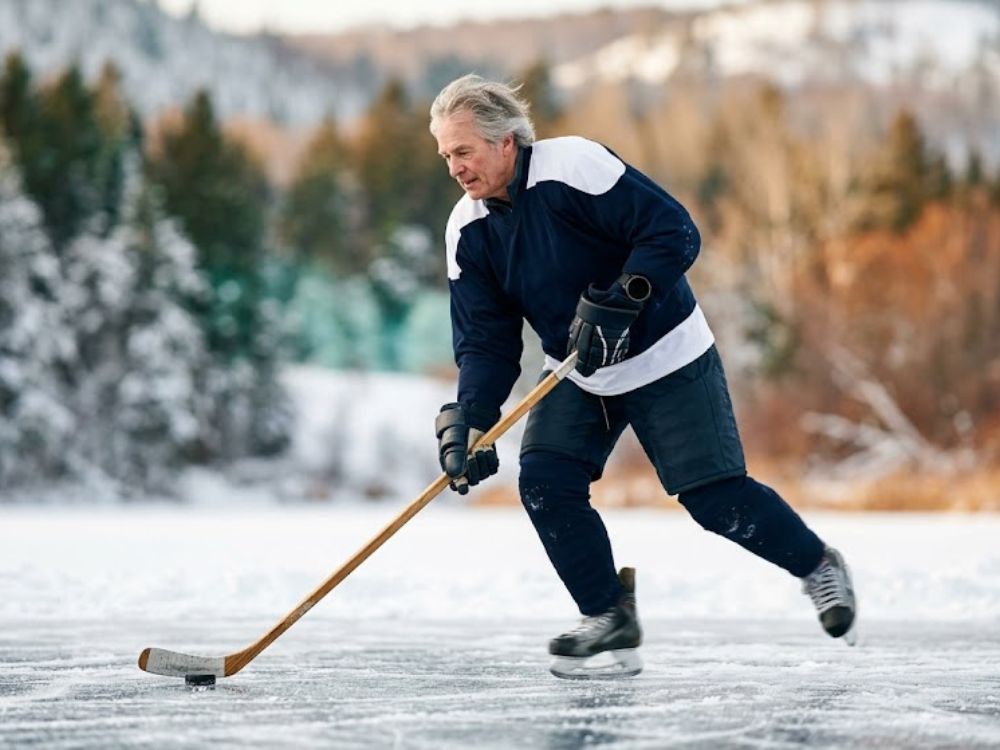
Someone decided, once, that after 60 you hang up your skates. The Saguenay Morning Hockey League apparently never got that memo. For more than a dozen years, players 55 and older have been showing up three times a week on the ice, winter after winter, with the same reliability as a Crave subscription. For a family supporting an aging loved one who is still firmly rooted in an active life, understanding that world means understanding what growing older in motion actually looks like.
What does morning hockey reveal about active life after 55?
Raymond was 67, and he had his own pre-victory rituals. Left shin pad first, always. Then he would check twice that his helmet clicked properly, even though it always clicked properly. And one long, slow breath before stepping onto the ice. He had been playing in a regional league for twenty-two years. He had fallen in love with the sport at age five and had never once let go.
What Raymond demonstrates without knowing it is what researchers call active physical resilience: the body's capacity to maintain its functions through regular effort rather than preserving them through stillness. Hockey demands balance, coordination, reaction speed and cardiovascular output all at once. Yet the benefits reach well beyond the physical. Older adults who play team sports consistently report far lower levels of social isolation than those who remain sedentary. Belonging to a team creates what sociologists call an anchor bond: a recurring reason to leave the house, to get ready, to matter to someone.
Does an emergency button belong in a veteran sports league locker room?
The following winter, Raymond slipped in the arena parking lot before he even made it inside. Nothing serious. A bruised knee, a little snow down his collar. He laughed first. But driving home that evening, he noticed that no one had really known how many minutes he had spent on the ground sorting through his scattered gear.
It is often a minor incident like that one which raises the question of a personal alert device, less as a concession than as a practical, logical decision to remain autonomous and in charge of one's own life for as long as possible. The Saguenay Morning Hockey League understood this in its own way: it integrated volunteer paramedics as first responders on the ice in the event of a medical episode. Arenas, parks, and trails are part of the daily landscape of a generation of retirees who move, by definition, through spaces where they are sometimes alone. A discreet, wearable alert pendant fits that reality without altering the habits. What it does change, considerably, is peace of mind, for the older adult as much as for the family waiting at home.
Medical alert systems designed for seniors who do not slow down
SecurMEDIC designs its SmartSAFE devices for older adults who live their lives at full speed. The SmartSAFE PLUS is a lightweight, waterproof alert pendant (IPX7), equipped with advanced GPS and automatic fall detection. It works anywhere in Canada, with no smartphone required, no long-term contract, and no hidden charges for pressing the panic button. Teleassistance is available 24 hours a day, 7 days a week. For a loved one who plays hockey on Tuesday nights and drives home alone after the game, it is the difference between an ordinary evening and one where everyone sleeps well.