Giving Dad a Panic Button
You're looking for what to get your father this year, and you already know that the idea of a panic button is going to collide with his suspicion of anything that questions his independence. Men of his generation have weathered hard winters, raised families, fixed cars and roofs, and they handled it all just fine, thank you. So when their children show up with a gadget that looks like a distress signal, the reception is rarely warm. And yet active seniors across Canada are also the first to plan ahead, anticipate, and get organized. SmartSAFE is for them.
Why do aging men resist the idea of assisted independence?
Bernard is sixty-nine years old and keeps three screwdrivers in every room of his house. Past Christmases, his kids gave him a cheese board, a bottle of scotch, once a coffee maker he replaced by January because his old one still worked perfectly well. Bernard doesn't read instructions. Bernard takes things apart to see how they work. Bernard often says "I've got it" before you've even finished the sentence.
This refusal of help isn't misplaced pride. It's an identity built over decades. Specialists in the psychology of aging speak of a "sense of personal competence," the conviction that one is capable of managing one's own life. Among men in this age group, that sense is particularly central. So any gift that can be read as an admission of weakness triggers a natural, predictable resistance. It isn't against you. It's for him.
Can a panic button actually respect masculine independence?
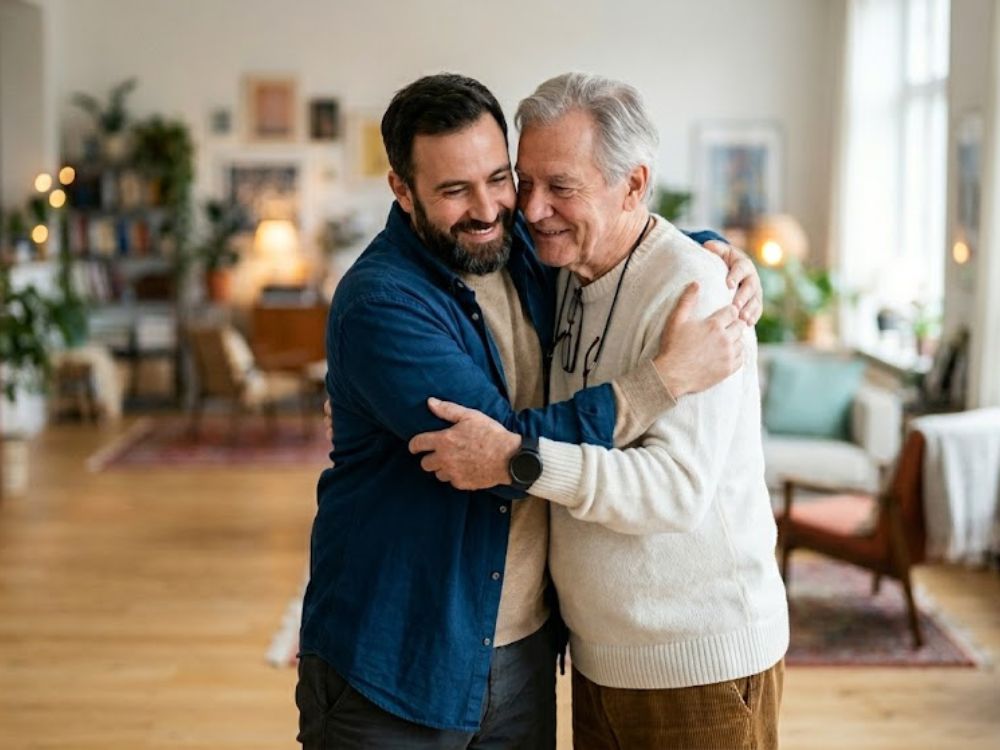
This Father's Day, Bernard received something unexpected. Not in a box with a ribbon. In a conversation where his son told him, "Look at this, I figured it's the kind of thing you'd have bought yourself if you'd heard about it." Bernard looked. Bernard asked questions. Bernard said "hm" for about ten minutes, which in his personal dialect means "keep going."
Still, framing changes everything. A call-for-help device presented as a constraint will be rejected. The same object presented as one more tool, like a screwdriver in his toolbox, opens a different conversation. The seniors who turn to this kind of product are precisely the active, independent, well-traveled ones: the ones who want to keep going on hikes, spend winters at their own pace, and run their daily lives without bothering anyone. Modern medical alert technology isn't aimed at the frail. It's aimed at the foresighted.
SmartSAFE is the medical alert system active seniors choose for themselves
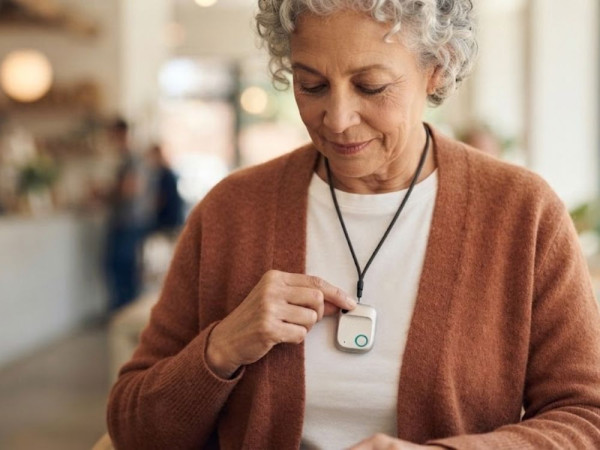
SecurMEDIC's SmartSAFE comes as a discreet pendant or a connected watch, with built-in GPS, automatic fall detection, two-way communication, and 24/7 monitoring anywhere in Canada. No phone required. No long-term contract. No hidden fees if the alarm is triggered. It's the kind of device a man who runs his own life chooses because he's thinking ahead, and that's exactly how you can present it to him. Father's Day is coming, and the summers ahead deserve to be lived to the fullest.