What panic button should you get for an aging mother in Canada?
Some visits are unlike the others. The one in spring, after a winter where you only saw each other at the holidays and a quick dinner in March, is one of them. The light in late May is harsh. It reveals things that February's dimness kept hidden. A stair railing that wobbles slightly, a less certain gait in the garden, a silence where a story she always told used to be. Nothing alarming. Just a small shift you register without knowing what to do with it.
How do you offer peace of mind to an aging mother without looking like you're worried?
Hélène stopped by to see her mother on the Sunday of the long weekend. Her mother, Claire, 76, has lived alone in a Rosemont duplex since her husband passed away six years ago. The coffee was ready, the conversation too. But Claire took three seconds longer to get up from her armchair. Three seconds. Hélène counted them without meaning to. The rest of the visit was normal. It was on the bus ride home that the thought came back to her.
Family caregivers don't always wait for an incident to start worrying. Most often, they accumulate small signals and don't know what to do with them. The difficulty is that raising the subject directly with an independent parent almost always produces the same reaction: a shrug, a laugh, a change of subject. And they're right. Nobody wants to be treated like a file. Well- considered foresight doesn't impose itself. It arrives as an invitation. It takes the form of a useful object that the older person keeps because they decided to, not because someone talked them into it.
Does an emergency button actually change the life of a mother living alone?
Claire said nothing to Hélène. But she has been thinking about her friend Denise since March. Denise fell in her kitchen on a Tuesday afternoon. She stayed on the floor for four hours before her daughter arrived for her usual Tuesday evening visit. Denise is doing better now. Claire, for her part, has been looking at her own kitchen differently ever since. She won't bring it up with Hélène. She'll look into what's available herself, at her own pace, without appearing to ask for anything.
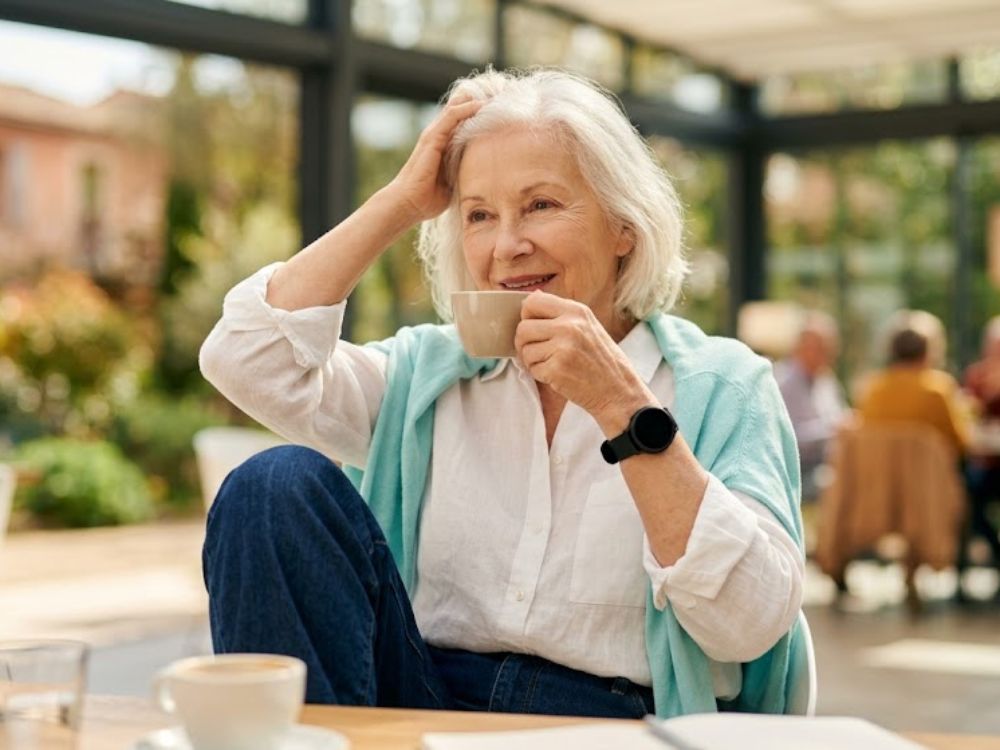
A modern personal emergency response device looks nothing like what most people picture. Today's alert pendants and smartwatches are worn like ordinary jewellery or a regular watch. Some include automatic fall detection, meaning that if the person falls and cannot press anything, an alert is sent anyway. What truly changes the equation is that these devices work anywhere in Canada via the cellular network, with no smartphone required. For the older person, this isn't a surveillance gadget. It's the quiet assurance of being able to keep running errands, tending the garden, and taking unplanned outings, knowing that if something happens, someone will answer.
SecurMEDIC medical alert systems: a response for mothers who want to stay independent
The SecurMEDIC SmartSAFE comes in several versions depending on lifestyle. The SmartSAFE PLUS is worn as a pendant, lightweight and discreet, with two-way communication directly from the device. The SmartSAFE S is a smartwatch with heart rate monitoring, integrated GPS, and water resistance. Both include 24/7 teleassistance anywhere in Canada, with no long-term contract and no hidden fees if the SOS button is used. Explore the models at securmedic.com/en and give your mother something she will have chosen for herself.
-600x450.jpg)